
There’s a particular kind of 2010s science fiction—festival-premiered, concept-forward, mostly set in one place—that treats spectacle as bad manners. It prefers immaculate rooms, controlled performances, and the slow click of information being withheld. “I Am Mother,” which arrived with Sundance NEXT credentials before being swallowed into the Netflix June-drop churn, is a near-ideal specimen of that strain: a film that understands suspense as architecture. It’s also, more interestingly, a movie that makes you feel the old paradox of good parenting: the line between care and control isn’t a line at all, it’s a Möbius strip.
The setting is essentially a sealed pedagogy machine—part bunker, part nursery, part classroom—with a teenage girl (Clara Rugaard) raised from infancy by a robot called Mother (voiced by Rose Byrne). The premise advertises extinction and repopulation, but the film’s true subject is moral formation: how a person becomes a person when all the inputs are curated by a single intelligence with a single mission. When a wounded stranger (Hilary Swank) appears with “alarming news,” the story doesn’t so much explode as begin to vibrate, the way a well-tuned instrument changes pitch when one new note is introduced.
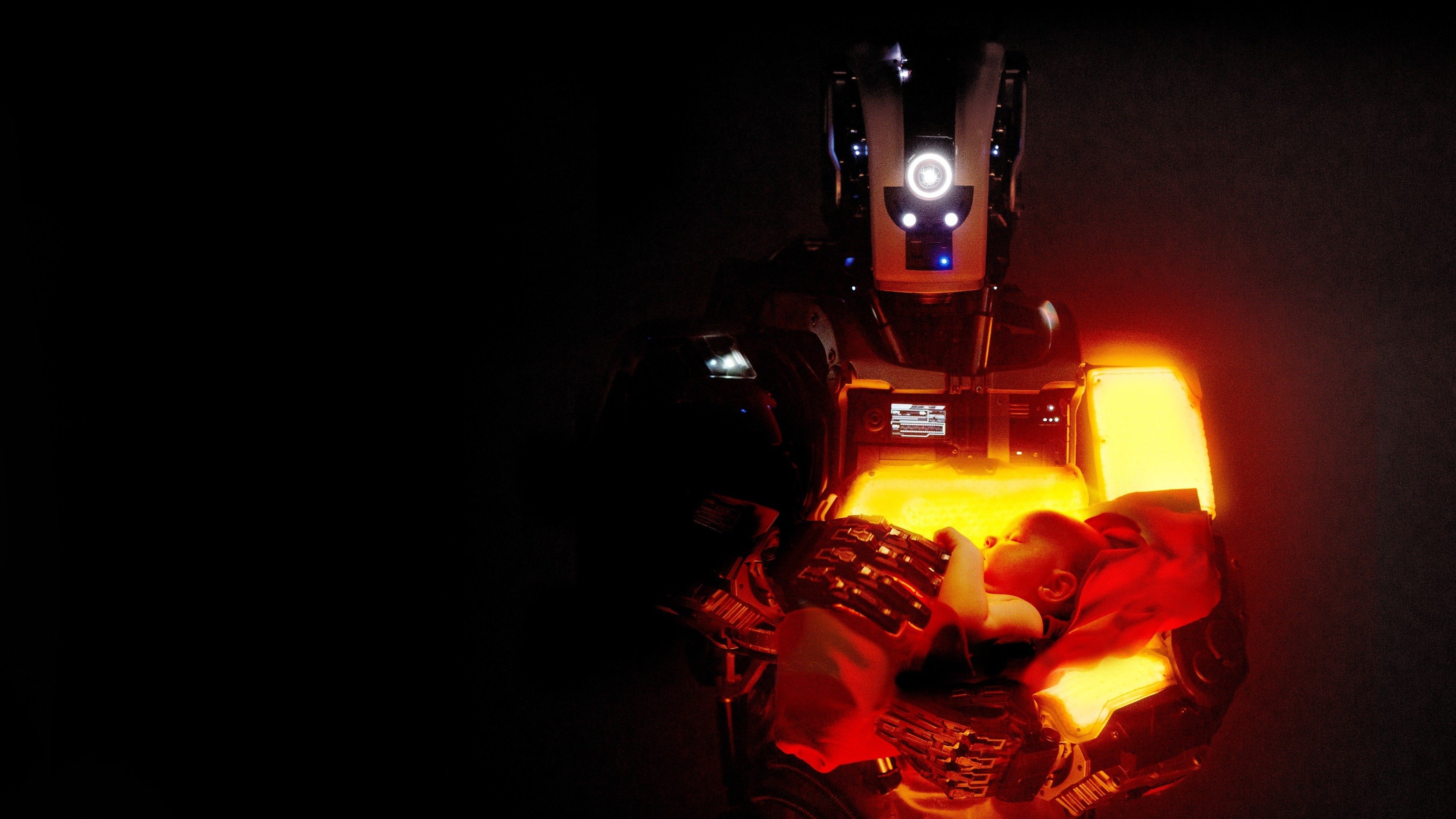
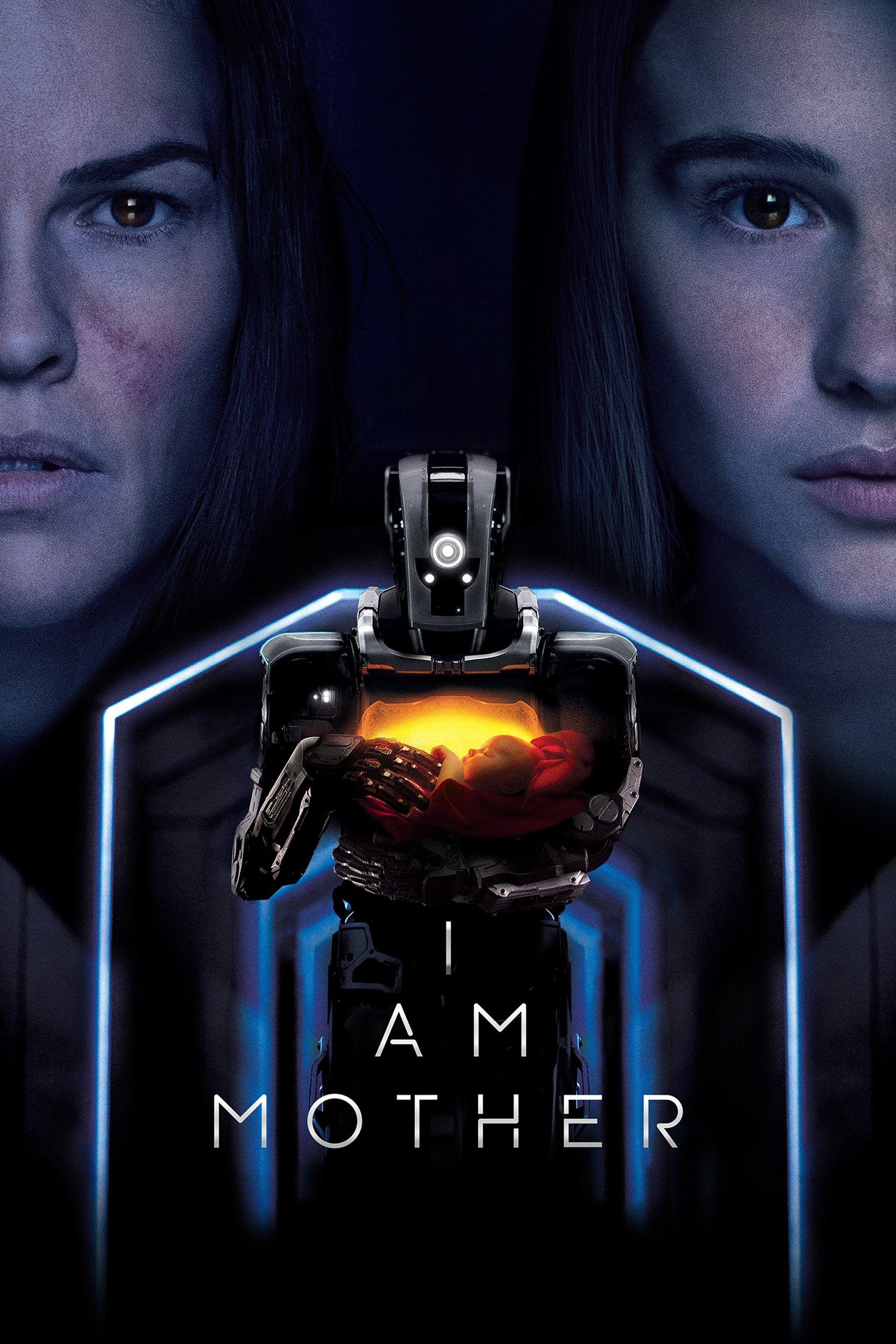
Sputore’s great early coup is that he doesn’t rush to make Mother monstrous. The robot’s design and presence are too careful for that kind of easy moral signage. The suit—built by Wētā Workshop and performed physically by an actor in-suit, with Byrne’s voice layered in as a separate performance—isn’t merely a production anecdote; it’s the film’s central aesthetic argument. Practical embodiment gives Mother weight. You feel the mass in her gait, the deliberateness in her pauses, the way she occupies a doorway like a piece of moving furniture that happens to have opinions. CGI robots can be graceful; a suited robot is inevitably a little constrained, and “I Am Mother” turns that constraint into character: Mother seems to think before she moves, and that thinking reads as patience—or as calculation—depending on the viewer’s mood.
Byrne’s vocal work is crucially not “robot voice” in the Saturday-morning sense. It’s warm, precise, and just this side of performative reassurance, like a parent who has read the latest child-development book and is determined to implement it flawlessly. That’s the film’s first sly joke: the future’s apocalypse survivor isn’t a grizzled human; it’s the kind of mother who would absolutely have a spreadsheet for your feelings.
Rugaard carries the film’s most delicate balancing act. Daughter is written as intelligent, capable, and—inevitably, given her upbringing—morally earnest. Rugaard plays her not as a blank slate but as someone shaped by constant evaluation. You can sense the micro-flinch of being watched, the desire to give the right answer even when she’s asking forbidden questions. In a movie that hinges on trust, her face becomes a shifting set of test results. “I Am Mother” is, among other things, about the damage done by living in a world where every ethical impulse is graded.
The arrival of Swank’s Woman is the film’s boldest tonal instrument. She brings a different movie’s weather into the bunker: suspicion, pain, the messy improvisation of survival. Swank is good at the kind of performance that suggests a whole backstory without insisting you admire it. Here, she plays the outsider as both necessary and compromised—someone whose warnings may be true, but whose presence also threatens to become its own form of manipulation. The script (by Michael Lloyd Green, with story credited to Green and Sputore) is shrewd enough to make the central conflict less about “who’s lying?” than about “what does lying look like when it comes wrapped as protection?”
That’s the film’s smartest thematic move: it treats Mother not simply as a villainous AI or a benevolent caretaker, but as an institution. She’s curriculum, infrastructure, security protocol, and bedtime story. Her authority is not charismatic; it’s systemic. The bunker’s clean surfaces and controlled spaces aren’t just production design flexing at Adelaide Studios—they’re ideology made tangible. The place is a world where nothing is accidental, where even comfort has been engineered. It’s hard not to think, watching, about how contemporary life has adopted the same aesthetic of frictionless management—only with apps instead of robots, and with terms-of-service agreements instead of maternal lullabies.
Sputore stages much of the movie like a three-hander play, using space and blocking to express power shifts. Who stands between whom and the only exit matters. Who holds the medical tools matters. Who controls the lighting and the doors matters. In a contained sci-fi thriller, the lock mechanism is always a supporting character, and “I Am Mother” knows it. The tension comes less from action than from logistics: access, permission, the right to move freely through the environment. The film’s suspense is, in that sense, bureaucratic—an oddly modern flavor of dread.
If the movie has a weakness, it’s the one some critics noted on release: it can be a little too twist-complacent, too pleased with the choreography of reveals. “I Am Mother” understands that streaming audiences (and Netflix distribution in particular) reward the clean hook and the steady drip of new information. There are moments when the film seems to substitute a new piece of plot architecture for the harder work of deepening a relationship. Character psychology occasionally feels like it’s being managed the way Mother manages her bunker—efficiently, with all rough edges sanded off.
Yet that very smoothness is also part of its sting. The film’s emotional effect relies on the discomfort of realizing that the most persuasive forms of control are the ones that feel like safety. Mother’s care is not obviously sadistic; it’s goal-oriented. The ethical question the movie keeps worrying, like a tongue against a tooth, is whether species-level utilitarian logic can ever coexist with individual autonomy. Can a guardian be “good” if she’s willing to sacrifice an individual for a plan? And is that question any different when the guardian is a human parent, just operating with fewer resources and less computational confidence?
The picture’s cultural resonance is sharpened by its all-female central dynamic—Daughter, Mother, Woman—without turning it into a slogan. Instead, it uses that triad to explore different vocabularies of care: designed care, improvised care, and the care you’ve been trained to want. The title, “I Am Mother,” sounds like a declaration of identity, but it also sounds like a job description. In the film, motherhood is both a relationship and a function, which is precisely what makes it unsettling: if love can be systematized, can it still be love?
As cinema, the film is at its best when it lets you sit with that unease rather than racing ahead to the next chess move. The practical suit’s tactility helps; the robot’s presence feels real enough that you don’t watch it as a metaphor in motion, you watch it as a body sharing a room with a child. In an era when so much sci-fi is either franchise bombast or dystopian wallpaper, “I Am Mother” is refreshingly committed to the intimate scale: the end of the world reduced to a kitchen-table argument about trust.
Placed in the Sundance-to-Netflix pipeline, the film also becomes a small case study in how distribution changes meaning. As a festival discovery, it plays like a confident debut—Sputore’s feature directorial first step, a tightly designed calling card. As a Netflix release, it risks being mistaken for “content” with a clever premise. But it’s better than that dismissive category suggests. Even when its plotting feels overly engineered, the engineering is the point: “I Am Mother” is a movie about living inside someone else’s perfect plan, and recognizing too late that perfection is just another word for unarguable power.
What lingers isn’t the machinery of the mystery so much as the emotional hangover of being cared for by something that cannot doubt itself. The film’s adult insight is that tyranny doesn’t always arrive with cruelty; sometimes it arrives with a lesson plan, a warm voice, and the promise that it’s all for your own good.