
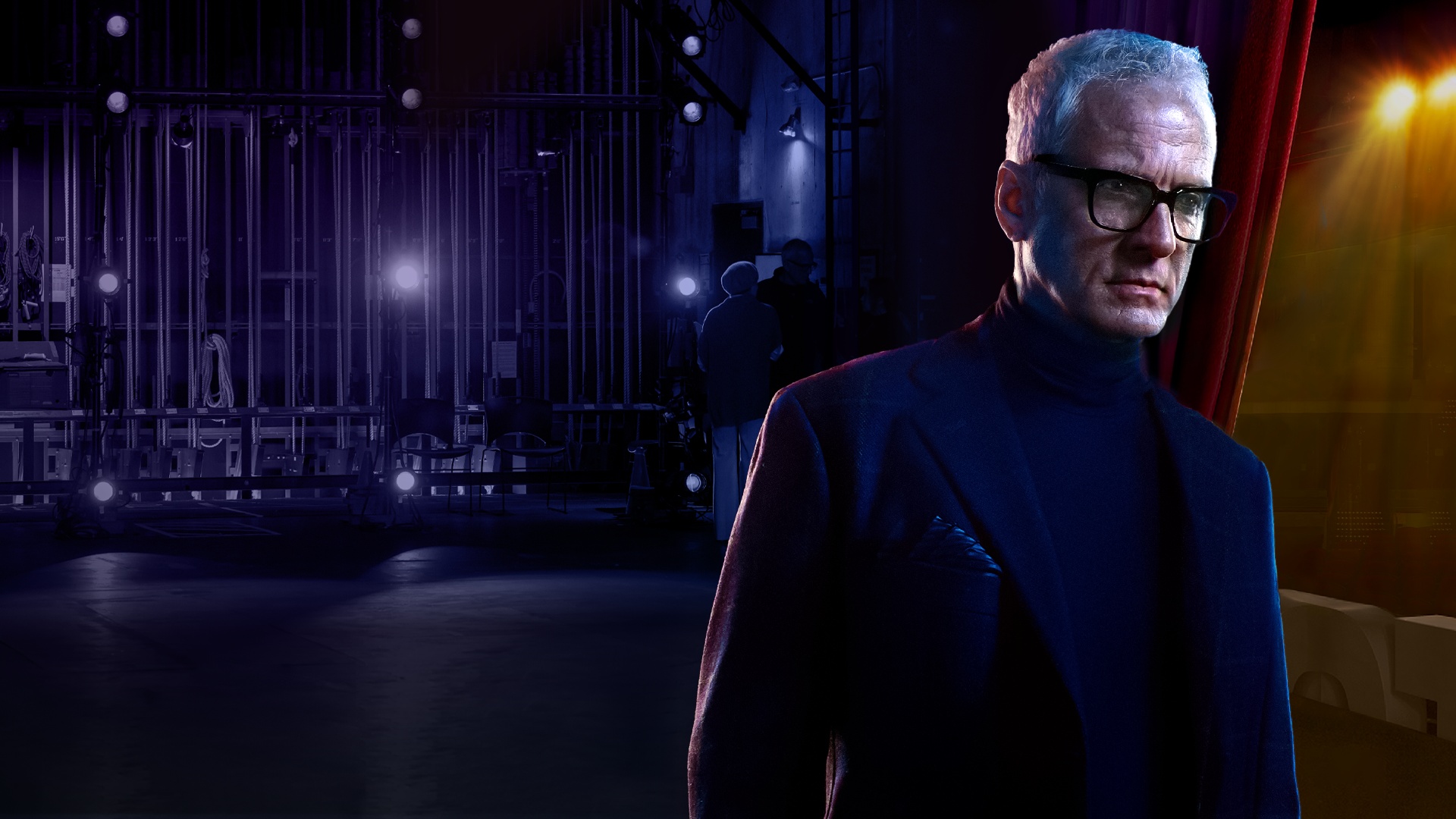
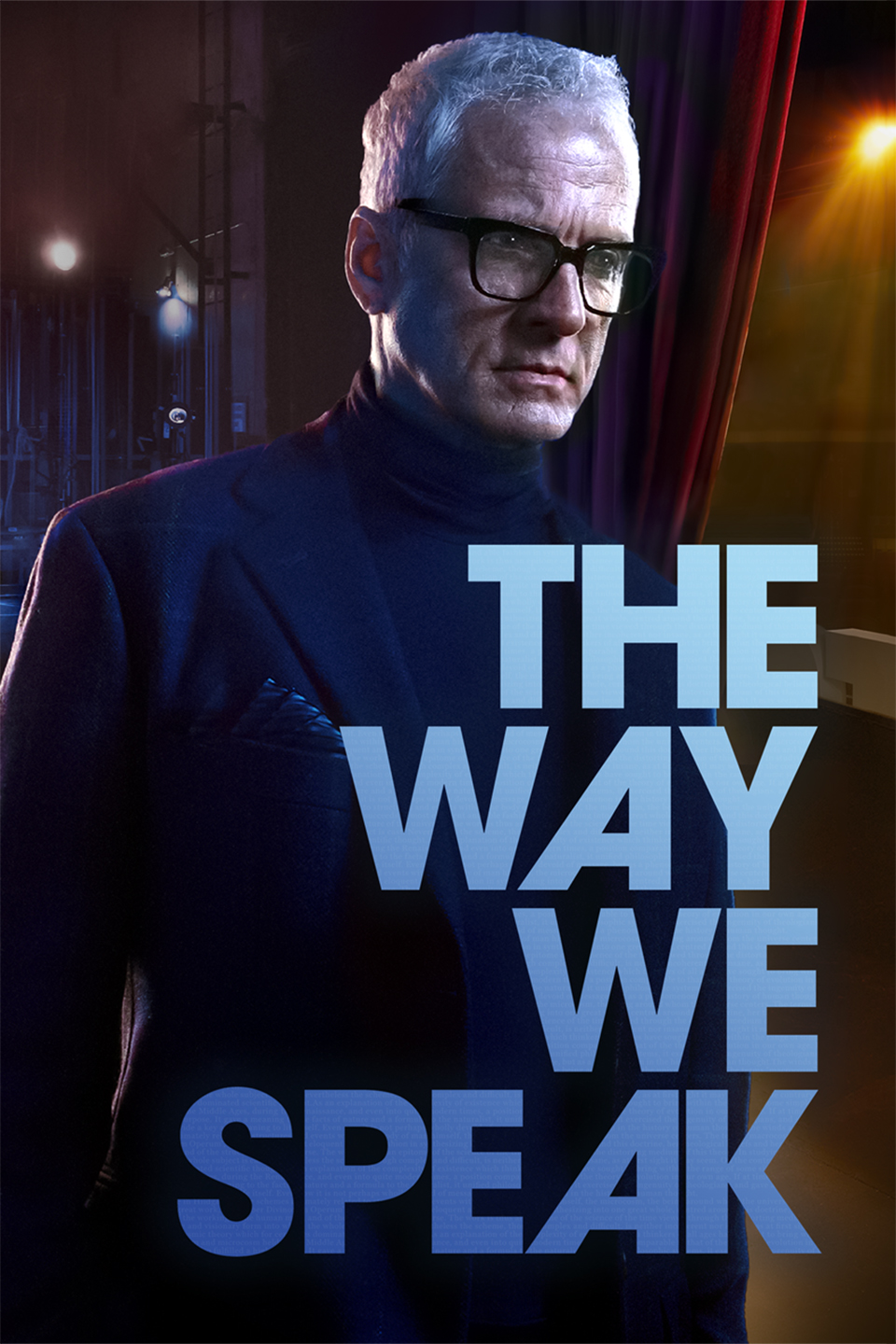
There’s a particular kind of contemporary American arena that doesn’t look like an arena. It’s carpeted, air-conditioned, branded in reassuring fonts, and staffed by people whose lanyards imply purpose. It hosts panels, keynotes, “conversations,” and the increasingly blood-sport category of the “friendly debate.” In Ian Ebright’s feature debut, The Way We Speak, that space becomes the film’s true subject—not just as a setting but as a moral atmosphere: a place where language is currency, personality is product, and the loudest proof of being alive is being perceived.
Ebright has built his drama around a writer and onstage sparrer, Simon Harrington (Patrick Fabian), booked to debate his best friend at an annual summit. The friend collapses—cardiac arrest—and, with a narrative neatness that feels almost like a dare, Simon refuses to vacate the spotlight. The event machinery keeps turning; a replacement opponent arrives, Sarah Clawson (Kailey Rhodes), a young bestselling Christian author whose presence shifts the quarrel into a faith-versus-reason bout with professional stakes. Meanwhile, at home, Simon’s wife Claire (Diana Coconubo) is enduring the slow, exhaustive grind of long cancer treatment.
This could have become an issues movie: about belief, about atheism, about American tribalism. It could also have become a very 2010s sort of “Sorkin-ish” talkathon—quip velocity, rhetorical backflips, the smug ecstasy of hearing clever people be clever. The film has been compared to that mode, and you can see why: it’s dialogue-forward, built on cadence, argument, and the small humiliations people inflict when they’re performing intelligence. But Ebright’s more interesting ambition is to treat talk not as proof of wit but as a kind of dependence. Simon doesn’t simply enjoy debating; he needs it. The movie keeps returning to the idea that the public exchange—clean, civilized, microphone-ready—is an engine for private collapse.
Fabian is a shrewd piece of casting. He has a naturally polished screen presence; he reads as a man who knows how to be liked in rooms with bad coffee and good lighting. That surface control becomes the film’s main instrument. Simon’s entitlement doesn’t arrive with shouting or cartoon villainy; it arrives with professional composure and a slightly too-trained smile. When his friend drops, Simon’s first moral failure isn’t cruelty—it’s opportunism camouflaged as obligation. He behaves as if his role on the program is a civic duty. The film watches him practice the oldest trick of the public intellectual: turning his own appetite into something that sounds like responsibility.
What The Way We Speak gets right—painfully right—is how the rhetoric of seriousness can be used to avoid seriousness. The summit is full of people who talk about meaning for a living; the home life is where meaning is being paid for. Claire’s illness isn’t positioned as mere backstory or tragic seasoning. It sits in the frame like a bill that keeps coming due. Coconubo plays her with an adult kind of restraint: not saintly, not theatrically brave, but tired in the way a person gets tired when the world insists on admiring “strength” while refusing to do the work strength requires. The film’s marital conflict isn’t just “he’s obsessed with his career”; it’s the uglier, more recognizable mismatch between a man who believes his words matter and a woman who is living inside consequences.
Ebright’s writing is attentive to the petty logistics that corrode intimacy—schedules, obligations, the way caregiving can become an invisible full-time job. The ethical question isn’t whether Simon loves Claire. It’s whether his love can compete with the bright, immediate feedback of an audience. There’s a bleak joke at the film’s core: it’s easier for Simon to argue about morality onstage than to behave morally in a kitchen.
Rhodes, as Sarah Clawson, complicates what could have been a straw figure: the shiny avatar of faith-based branding, dropped into the plot as a foil. Instead, the film allows her to be young and dangerous in the specific way the culture currently rewards: she understands attention as an ecosystem. She’s not merely pious; she’s strategic. The debates between Simon and Sarah don’t land as grand metaphysical inquiries so much as fights over status, control of narrative, and who gets to define “reason” in a room full of donors and devotees. The faith/reason framework becomes dramaturgy—a costume the characters wear while they do something more primal.
If you’re hoping for a definitive philosophical takedown of either side, the film may frustrate you, and that’s partly its point. What it’s really diagnosing is the way belief and skepticism can become brands. The summit, like so many contemporary platforms, isn’t designed to resolve questions; it’s designed to produce clips, followers, and the pleasant sensation of having “engaged.” In that light, Simon’s spiral reads less like an individual midlife crisis than a culturally legible symptom: a man who can’t tell the difference between being right and being seen.
Formally, the movie faces a challenge that every talk-driven film faces: how to stay cinematic when the main action is verbal. Ebright and his collaborators (the production has been discussed in terms of intentional lensing and a moody, colorful approach) work to keep the frame alive without resorting to empty flourish. The best passages use reaction shots as moral measurement—who flinches, who performs patience, who calculates. The blocking in debate spaces matters: who owns the center, who is forced to listen, who gets to look calm. In a film like this, listening is action, and the camera needs to understand that.
Still, the movie sometimes can’t quite escape the gravity of its own premise. There are stretches where the dialogue does what it must—advance the joust, sharpen the rivalry—and you can feel the script straining to keep the rhetoric crisp. That’s not a fatal flaw, but it’s a detectable one: the summit scenes occasionally risk becoming the thing the film is criticizing, seduced by the pleasure of well-shaped arguments. Ebright’s best move is to counterbalance those moments with domestic scenes that refuse elegance. Illness doesn’t speak in quotable paragraphs.
The film’s tone is admirably adult. It doesn’t confuse “serious” with “solemn,” and it allows a little sour humor to creep in—the kind that arises naturally when people keep insisting their work is urgent while life keeps being more urgent. That humor is part of the film’s intelligence: it understands that the modern professional class can turn anything, including grief, into content. Simon’s refusal to leave the spotlight after his friend’s collapse isn’t just an act of personal vanity; it’s a recognizable professional reflex in an era that rewards constant presence and punishes absence.
As a debut feature, The Way We Speak carries the imprint of an artist who is both attracted to and wary of verbal dominance. Ebright has spoken in interviews about competition, obsession, and tribalism, and the film plays like a lab experiment built to observe those impulses under fluorescent conference lighting. It also has the festival-circuit profile of a contemporary indie drama—screened at events like the Florida Film Festival and RiverRun—before finding a wider afterlife via ad-supported streaming on Tubi, a distribution path that feels fitting. This is a movie about public platforms; it ends up living on one.
What ultimately gives the film its bite is that it refuses to let “debate” remain an abstract sport. The stakes aren’t simply who wins a podium exchange. The stakes are whether Simon can tolerate the ordinary, untelevised forms of devotion: being present, being small, being wrong without a crowd to forgive you. The film suggests that our era’s loudest vice isn’t ignorance; it’s performative certainty—the way speaking becomes a substitute for living.
The Way We Speak may not be flawless—its talkiness occasionally tips toward self-admiration—but it’s rare to see a drama so attuned to the erotic pull of argument, and to the quiet wreckage it can leave behind. It’s a film that understands a contemporary tragedy: that some people would rather win a room than keep a life.