
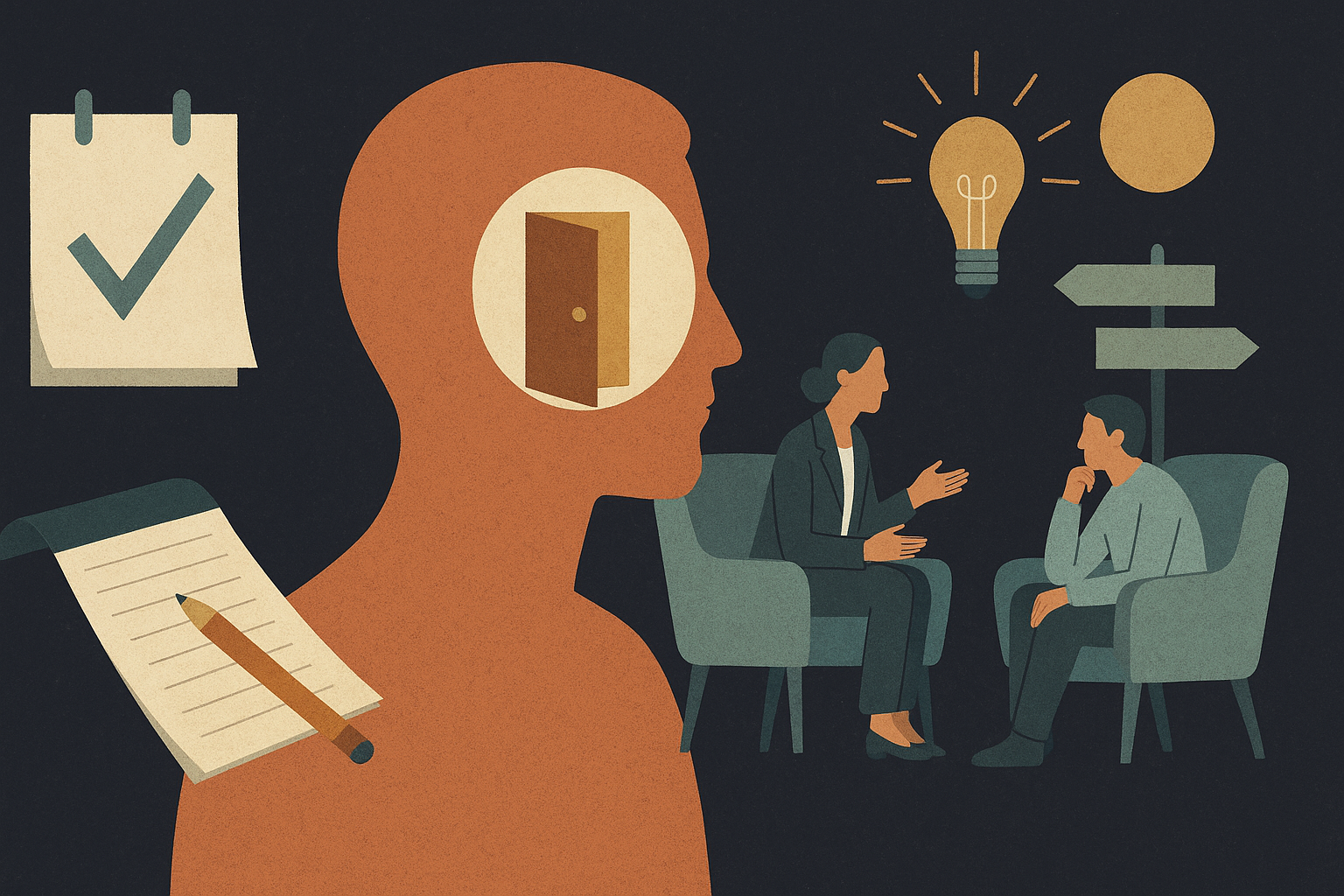
Single-session therapy (SST) is having a moment for a reason: demand for mental health care has outpaced supply, waitlists are long, and many people want help without committing to months of weekly appointments. The promise is not a miracle cure; it’s a practical proposition—design one session to matter. Done well, SST can be a targeted intervention that reduces distress, boosts a sense of agency, and helps people move forward, even if they later choose more therapy.
What SST is (and what it isn’t) SST is a deliberate approach in which therapist and client treat a single appointment as potentially sufficient—focusing on a specific goal, decision, or stuck point, rather than assuming an open-ended course of care. It draws on several traditions: brief therapy models (including Solution-Focused Brief Therapy), elements of cognitive-behavioural therapy (CBT), motivational interviewing, and problem-solving therapy. In youth services and digital programs, it often includes structured exercises, worksheets, and a clear plan for follow-up.
Crucially, SST is not the same as “one session because that’s all you could get.” It’s not a cancellation, a triage appointment, or a hurried intake disguised as therapy. The clinical idea is intentionality: clear focus, an active session, and an end-of-session plan.
What research suggests about effectiveness Across decades of studies—ranging from walk-in clinics to online single-session interventions—SST shows small-to-moderate average benefits for common, lower-acuity concerns: reduced anxiety symptoms, improved mood, increased hope, and greater perceived coping. Effects vary widely by population, setting, and outcome measured. Some studies find SST outcomes comparable to longer treatment for certain narrowly defined problems, while others show SST as helpful but less durable than multi-session therapy.
Two important caveats shape the evidence:
1) Selection and context matter. People seeking SST are often motivated, have circumscribed concerns, and may have fewer complicating factors. That can inflate apparent effectiveness relative to “real world” caseloads that include high risk, chronicity, and comorbidity.
2) The evidence base is uneven. There’s stronger support for SST-style interventions for anxiety, mild-to-moderate depression, specific coping problems, and youth-focused digital tools than there is for complex trauma, severe substance dependence, or entrenched personality difficulties. Follow-up periods are often short, and outcomes like functional recovery (work, relationships) are less consistently measured than symptom change.
The key tension: access versus adequacy The rise of SST sits at an uncomfortable crossroads between clinical innovation and system pressure.
From one angle, SST is empowering: it respects people’s time, lowers the threshold for getting help, and can serve as an effective “first dose” of care. It can also reduce dropout: if many clients attend only one or two sessions anyway (a common pattern in routine services), then designing the first session to be maximally useful is a quality improvement move.
From another angle, SST risks becoming a rationing tool—“a session for everyone” instead of “enough care for those who need it.” The debate isn’t whether one session can help (it often can), but whether systems will use SST to substitute for ongoing therapy when ongoing therapy is clinically indicated.
A pragmatic middle position is stepped care: SST as an accessible starting point, with clear pathways to more intensive, longer-term treatment when needed. The unresolved question is operational: can services reliably identify who should step up, and can they provide that next step in time?
Who SST may help most (and for what) SST tends to fit best when the goal is specific and time-bounded. Examples include:
- A discrete anxiety problem (e.g., handling presentations, sleep-related worry) where you can learn a concrete tool and practise it. - A decision point (stay/leave a job or relationship; whether to disclose a diagnosis; how to set boundaries). - A coping spike (grief anniversary, new parent stress, conflict at work) where you need stabilisation and a plan. - Skills-focused work: behavioural activation “starter plans,” exposure planning, communication scripts, relapse prevention planning.
It may be especially useful for people who are curious about therapy but hesitant to commit, or who face cost and scheduling barriers.
Where SST may fall short—and when it’s not appropriate SST is not designed to carry high-risk situations alone. A single session may be insufficient (or unsafe as a stand-alone plan) when there is:
- Current suicidal intent or recent serious self-harm - Risk of harm to others - Psychosis, mania, or severe functional impairment - Severe substance dependence or withdrawal risk - Ongoing domestic or family violence where safety planning and coordinated support are required - Complex trauma with significant dissociation or instability
It can also be a mismatch when the problem is diffuse (“everything is falling apart”) and you need time to build skills, work through patterns, or establish a secure therapeutic relationship.
How SST compares with multi-session therapy Multi-session therapy offers advantages SST typically cannot: a deeper working alliance over time, repeated practice with feedback, and room to address underlying patterns rather than immediate bottlenecks. Evidence for many conditions—moderate-to-severe depression, PTSD, eating disorders, obsessive-compulsive disorder, complex comorbidity—still strongly supports structured, multi-session treatments.
But the comparison can be misleading if it assumes people will actually receive sustained care. In many real settings, the true choice is not “12 sessions vs 1,” but “1 good session vs months on a waitlist.” SST can be a bridge: stabilise now, clarify goals, and coordinate next steps.
Practical guidance: how to use one session well ### What to ask a provider before booking - Is this designed as single-session therapy or just an initial consult? Ask how the session is structured. - What outcomes do you usually aim for in one visit? (A plan, a tool, a decision, referrals.) - How do you assess risk and suitability for SST? - What happens if I need more support? Ask about follow-up slots, referrals, or stepped-care pathways. - What approach will you use? (CBT tools, problem-solving, motivational interviewing, etc.)
How to prepare - Write a one-sentence “headline” problem and a one-sentence “best outcome.” - Bring 2–3 recent examples of when the issue showed up (what happened, what you did, what you wish you’d done). - Decide what you want by the end: a script, a plan, a coping tool, or a decision framework. - Be ready to discuss safety (sleep, substance use, self-harm thoughts) candidly—this shapes recommendations.
Options for follow-up Good SST ends with an explicit next step. That might be: - A scheduled second session (not routine, but available if needed) - A referral to longer-term therapy or a specialist service - Group programs (CBT groups, skills groups) that scale support - Digital supports (guided online CBT, evidence-based apps) paired with check-ins - Primary care follow-up (GP/psychiatry review for medication or assessment)
What’s often missed or misunderstood “One session” doesn’t mean “one-size-fits-all.” SST works best when tailored: the right problem, the right tool, the right level of risk management.
The first session is doing more work than we admit. Even in traditional therapy, early sessions often contain the key ingredients—validation, reframing, a new narrative, a concrete experiment. SST makes that explicit.
Equity and access cut both ways. SST can widen access by lowering cost and wait time, especially via digital delivery. But digital-first SST can exclude people with limited privacy, data access, disability accommodations, or language support. In-person SST may be more clinically nuanced yet harder to scale. And if insurers or overstretched systems treat SST as a cap rather than an entry point, people with higher needs may be left behind.
Research gaps remain. We still need better data on long-term outcomes, who benefits most (and least), culturally adapted SST models, and how to integrate SST safely into stepped-care pathways without turning it into covert rationing.
Questions to keep open 1. When does SST function as a genuine clinical innovation—and when is it a symptom of underfunded mental health systems? 2. What are the most reliable “stepping up” signals after SST (symptom trajectories, risk markers, functional impairment), and how can services act on them quickly? 3. How do digital single-session interventions compare with in-person SST for different communities, especially where privacy and trust are barriers? 4. Can SST be culturally adapted without losing its focus and structure—and who gets to define “success” in one session? 5. What outcomes should matter most: symptom scores, daily functioning, service engagement, or prevention of deterioration?
Takeaways for today - Treat SST as a focused intervention: pick one concrete goal and ask for a plan you can act on this week. - Confirm it’s designed as SST (not just intake), and ask what happens if you need more care. - If there’s current safety risk, severe impairment, or complex trauma/substance dependence, SST alone is unlikely to be enough—seek higher-support options. - Prepare like you would for a medical appointment: examples, priorities, and a clear “best outcome.” - Prefer SST providers or services that offer stepped-care pathways—one session that opens doors is better than one session that closes them.